
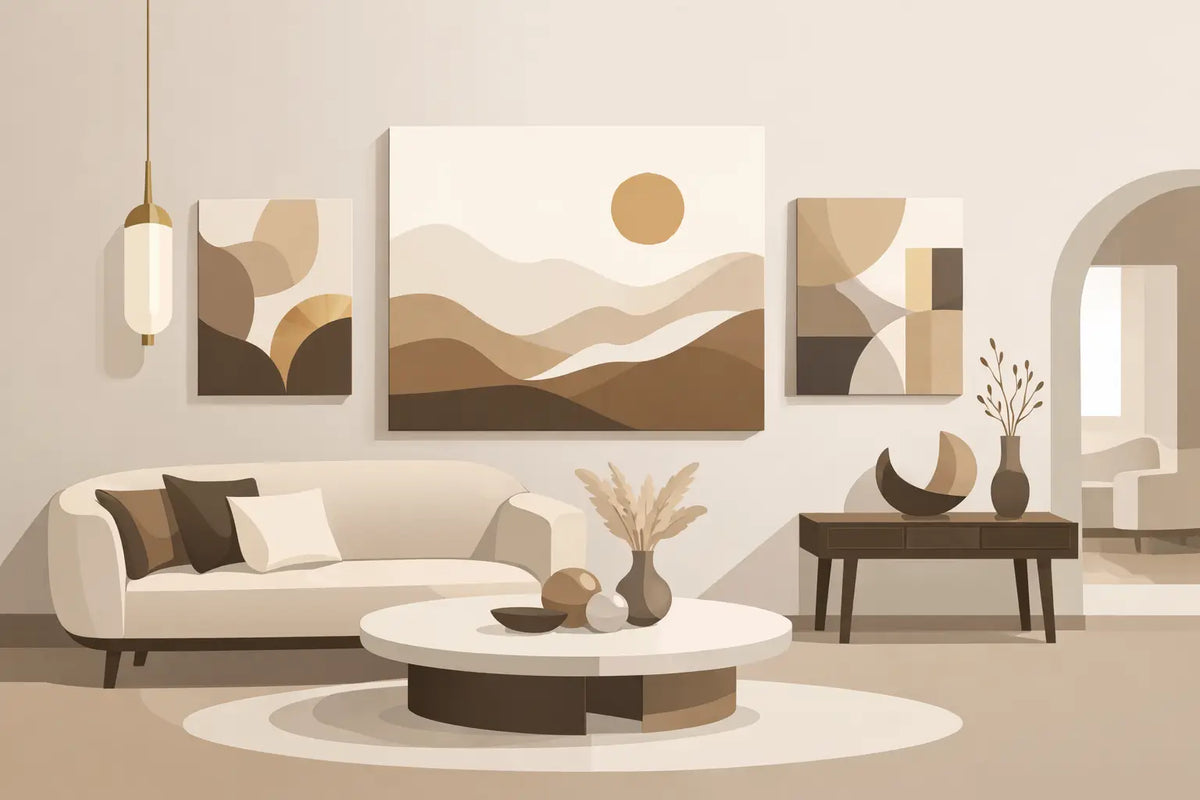
A beautiful room can be perfectly furnished and still feel unfinished until the walls carry a point of view. This guide to luxury wall art is for choosing work that does more than fill a blank space: it should establish atmosphere, reward a closer look, and feel at home with the life you have created.
Luxury is not simply a matter of price or a recognizable name. It is visible in artistic authorship, the quality of the image and materials, the confidence of the scale, and the way a piece relates to its surroundings. The right artwork can make a quiet room feel intentional, a coastal home feel more expansive, or an office feel distinctly your own.
Start With the Feeling, Not the Empty Wall
It is tempting to begin with dimensions, especially when a large wall is asking for attention. Begin instead with the feeling you want the room to hold. A luminous waterscape can bring stillness to a primary bedroom. A dramatic yacht painting can give a living room movement, elegance, and a sense of open horizons. An original work with visible brushwork may lend a library or private office a more intimate, collected character.
Subject matter has a practical role as well as an emotional one. Nautical art is especially compelling because it can be serene or energetic depending on the composition. A distant vessel on quiet water creates restraint. Sails under a changing sky introduce drama. Reflections, harbors, and abstracted sea tones can complement a coastal interior without turning it into a theme.
Choose art that feels connected to your taste, your travels, or the way you wish to live in the space. A luxury home should not look as though every choice was made to satisfy a trend.
Choose Art With a Point of View
The distinction between decorative imagery and fine art often becomes clear over time. Decorative pieces may suit a color scheme on the day they arrive, but work with a distinctive artistic voice continues to reveal something new. Look for composition, light, gesture, and the artist's interpretation of a subject. These are the qualities that make art feel alive rather than merely coordinated.
Buying directly from an established artist adds another dimension to the experience. You know where the work comes from, whose hand and imagination shaped it, and why the subject matters. For first-time buyers, this can make acquiring art far less formal than entering a traditional gallery, while retaining the pleasure of owning a piece with genuine artistic provenance.
Original paintings offer singularity: there is only one, with its own surface, nuances, and history. Museum-quality canvas prints make the same artistic world more accessible and are often the right choice for larger installations, second homes, or rooms where you want visual impact without committing to an original. Neither is automatically the better decision. It depends on your budget, the room's importance, and whether uniqueness or scale is your priority.
Scale Is What Makes Luxury Wall Art Convincing
Undersized art is one of the few choices that can make an otherwise beautiful room feel hesitant. A small piece above a broad sofa, console, or bed tends to float. Large-scale art, by contrast, creates presence and allows the composition to be experienced from across the room.
As a starting point, artwork above a sofa or headboard often looks balanced when it spans roughly two-thirds to three-quarters of the furniture's width. Leave enough breathing room around the edges so the art has a frame of wall space, rather than feeling pressed into place. In rooms with high ceilings, consider vertical works, a generous horizontal canvas, or a considered multi-panel arrangement.
There are exceptions. A small original can look exquisite when treated as a jewel: hung over a narrow pedestal, placed within a thoughtful salon-style grouping, or given a quiet wall of its own. The issue is not size alone. It is whether the work has been given enough visual authority.
Let Viewing Distance Guide Your Choice
A painting seen from the dining table, across a great room, or at the end of a hallway needs a composition that reads clearly at a distance. Larger canvases and strong horizons work particularly well here. In a reading nook, entry passage, or beside a desk, a more detailed image can offer a private moment of discovery.
Before ordering, use painter's tape to mark the proposed dimensions on the wall. Stand at the room's entrance, then sit where you normally sit. This simple exercise exposes scale problems before they become expensive ones.
Coordinate Color Without Making It Match
Luxury interiors rarely rely on exact matching. A painting does not need to repeat the blue of a rug or the beige of a sofa to belong in the room. In fact, an exact color match can make art feel selected as an accessory rather than chosen for itself.
Instead, look for a conversation between tones. A sea painting in silvery blue, pearl, charcoal, and soft sand can sit beautifully near warm oak, cream upholstery, black metal, or polished stone. Deep navy artwork can ground a pale space, while sunlit water and soft skies can lift a room with darker walls or richly toned furniture.
Pay attention to the room's changing light. A canvas that feels calm in morning sun may become more dramatic in the evening under lamps. This is part of art's pleasure, particularly with water scenes, where shifts in light echo the subject itself.
Canvas, Framing, and Finish Matter
The physical presence of the artwork should meet the standard of the room. Museum-quality canvas has depth, texture, and a more painterly character than a thin paper poster. It is an excellent choice for contemporary spaces, coastal homes, and rooms where you want art to feel confident but not overly formal.
A framed work can provide additional definition, especially in traditional interiors or rooms with architectural detail. The frame should support the image rather than compete with it. Minimal black, natural wood, warm metallic, or restrained white frames each create a different effect. If the painting itself has a strong visual edge, an unframed or gallery-wrapped canvas may be the most elegant option.
Consider practical conditions too. Direct sunlight can affect art over time, while humidity and salt air deserve extra thought in waterfront properties. Placement away from intense, sustained sun and suitable climate control will help preserve the work's appearance.
Build a Multi-Piece Display With Intention
Diptychs and triptychs can bring rhythm to a large wall, particularly where one expansive canvas might feel too dense. They work beautifully with waterscapes because changing light, a continuous horizon, or a sequence of sails naturally carries across panels.
The key is to treat multiple pieces as one composition. Keep the spacing consistent and modest, usually a few inches rather than a dramatic gap. Hang the group at a unified centerline, not as separate pictures that happen to sit near each other. The result should feel architectural and composed.
For a gallery wall, mix only when there is a clear thread: shared subject matter, a related palette, similar framing, or a meaningful personal story. Random variety can look busy quickly. In a refined interior, fewer, stronger works are often more persuasive.
Placement Should Serve Daily Life
Art is usually best hung with its center near eye level, commonly around 57 to 60 inches from the floor. That guideline shifts when furniture, ceiling height, or an architectural feature is involved. Above a sofa or console, maintain a visually close relationship between the top of the furniture and the bottom of the art. The work should feel anchored, not suspended far above the room.
Do not reserve your best work only for formal spaces. An entry hall deserves an image that creates anticipation. A home office benefits from a view that offers mental distance during a demanding day. In a vacation home, art can establish continuity between the house and the landscape beyond its windows.
A free wall visualization service is especially valuable when deciding between sizes or arranging a multi-piece installation. Seeing a proposed artwork in your own room removes much of the uncertainty that an online image cannot solve. At Leonardo Pereznieto, that personal guidance reflects a simple belief: art should feel exciting to choose, not intimidating.
Buy With Confidence, Then Give the Work Time
When purchasing fine art online, clear photography, material details, delivery expectations, and a fair return policy are not minor conveniences. They are part of a trustworthy acquisition experience. Worldwide shipping and a 30-day refund policy provide reassurance, particularly for buyers furnishing a home from a distance or selecting a significant piece as a gift.
Once the art is installed, live with it before changing everything around it. The best work gradually influences the room: a cushion moves, a lamp is repositioned, an unnecessary object disappears. Allow the painting to lead. A considered piece of luxury wall art does not simply complete a wall. It gives the entire room a horizon to look toward.


Leave a comment
This site is protected by hCaptcha and the hCaptcha Privacy Policy and Terms of Service apply.