
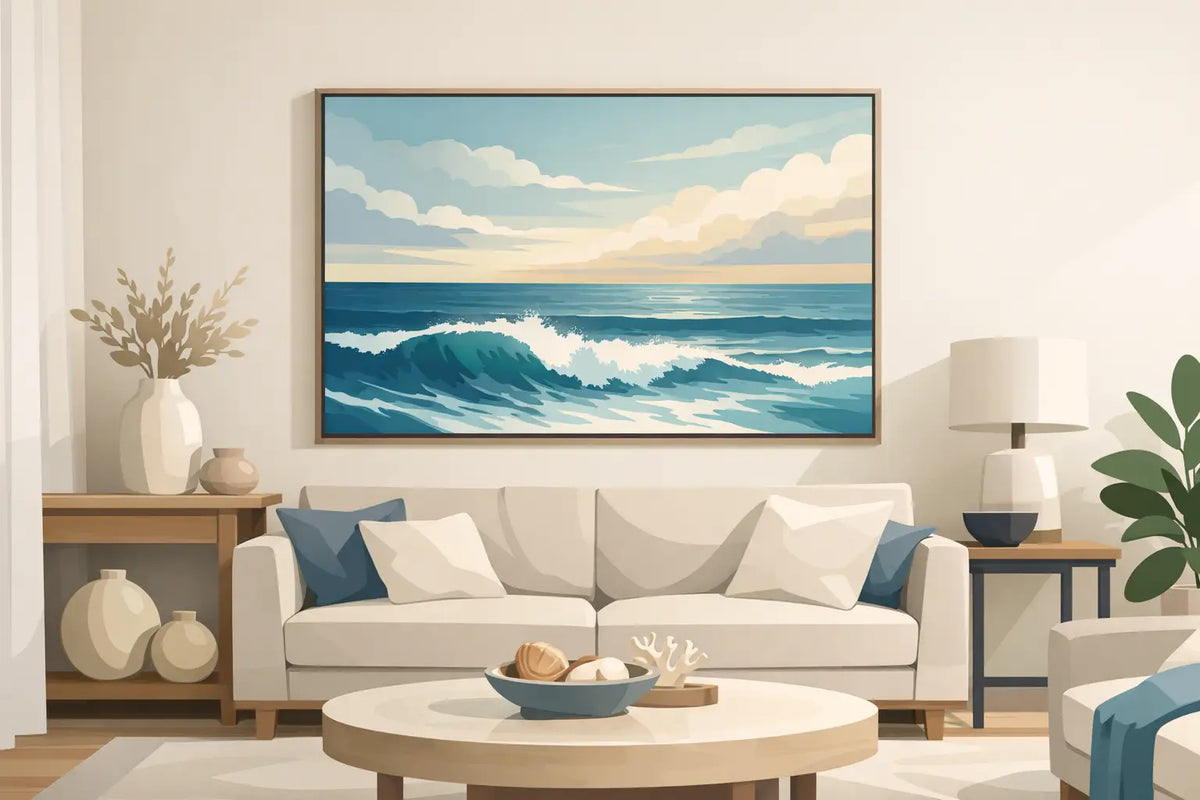
A great ocean painting does more than suggest a destination. It changes the emotional temperature of a room: the horizon creates calm, moving water adds energy, and a distant yacht can evoke freedom, achievement, and the pleasure of unhurried travel. The question of how to style ocean art is therefore not simply about finding a vacant wall. It is about giving the work enough presence to shape the room around it.
Ocean art deserves better than a predictable collection of shells, striped cushions, and decorative anchors. Whether your home is on the coast or in the center of a city, the most sophisticated approach is to let the artwork establish a mood, then support it with thoughtful scale, material, and color choices. The result can feel deeply personal and quietly luxurious rather than themed.
How to Style Ocean Art: Begin With the Feeling
Before choosing placement or a frame, consider what the work asks the room to feel like. A serene waterscape with a pale horizon belongs naturally in spaces designed for rest and reflection. A dramatic seascape, with deep water and changing skies, has the authority to anchor a formal living room, an entry, or an executive office. Yacht art often brings a more distinct character: polished, aspirational, and connected to the elegance of travel.
This first decision matters because ocean scenes are not interchangeable. A sunlit Mediterranean harbor, a storm rolling over open water, and a close study of a sailboat each create a different atmosphere. Match the emotional quality of the painting to the purpose of the room, not only to its colors.
In a bedroom, a quieter work with softened blues, pearl grays, or warm sand tones can make the room feel expansive without becoming distracting. In a dining room, choose a piece with richer contrast or a more expressive sky, where it can hold its own after sunset. For a study or office, a yacht painting can be especially compelling when paired with tailored furniture, natural woods, and restrained accessories.
Let Scale Lead the Arrangement
The most common mistake with fine art is choosing a work that is too small for the wall. A beautiful painting can lose its force when it is placed above a large sofa or console without enough visual weight. Ocean art is particularly effective at a generous scale because water and horizon need room to breathe.
As a useful starting point, art above a sofa, bed, or sideboard should generally span about two-thirds to three-quarters of the furniture’s width. This is not a rigid rule, but it helps create a relationship between the artwork and the architecture of the room. Leave enough wall space around the piece so the composition feels intentional rather than crowded.
A single large canvas is often the strongest choice above a sofa or in an entryway. Its uninterrupted surface allows the viewer to experience a broad horizon or the movement of waves as the artist intended. In a narrow hall, over a long dining table, or along a staircase, a pair or a multi-piece arrangement can provide rhythm while retaining a sense of calm.
Hang at a Human Height
A painting should meet the eye, not float near the ceiling. In most rooms, place the center of the artwork around 57 to 60 inches from the floor. When hanging art above furniture, keep the bottom edge comfortably connected to the piece below it, usually around 6 to 10 inches above a sofa, headboard, or console.
Ceiling height can change the calculation. In a room with particularly tall walls, a larger work or a vertically oriented painting may be needed to avoid a stranded appearance. The goal is balance, not simply filling every available inch.
Build the Room’s Color Story Around the Work
Ocean art offers a surprisingly versatile palette. It can complement crisp white interiors, dark wood libraries, warm contemporary spaces, and homes with layers of traditional detail. The key is to repeat colors selectively instead of attempting to reproduce every shade in the painting.
Choose one or two tones from the artwork and echo them elsewhere. A deep navy from a seascape may appear in a velvet chair, a book spine, or a ceramic vessel. A soft aqua might be reflected in a single linen pillow or a subtle rug pattern. If the painting contains warm sunlight, sand, or a burnished hull, bring that warmth into the room through oak, brass, leather, or woven fibers.
Avoid turning blue into an obligation. Ocean art does not require a room full of navy accessories. In fact, paintings of water often look more sophisticated against warm neutrals such as ivory, mushroom, camel, taupe, and putty. These colors make blues appear clearer and allow the artwork to remain the focal point.
For a more dramatic setting, pair a moody ocean scene with charcoal walls, walnut furniture, aged brass, and cream upholstery. The contrast can feel intimate and collector-focused. For a lighter setting, use chalky whites, pale woods, and textured linen, then let the painting supply the room’s depth and movement.
Choose Materials That Feel Honest
The strongest interiors do not imitate the seaside literally. They suggest its tactile qualities through authentic materials. Linen, wool, rattan, oak, leather, stone, and brushed metal all sit beautifully beside ocean art because they add texture without competing for attention.
A sleek contemporary waterscape can look exceptional above a low-profile sofa with boucle upholstery and a travertine table. A traditional yacht painting may feel at home with a leather club chair, a fine wool rug, and a mahogany or walnut console. The styles can vary, but the materials should have substance.
Keep decorative objects edited. One sculptural bowl, a stack of well-chosen books, or a single piece of coral-inspired ceramic can add dimension. A crowded mantel or console, however, can make even a museum-quality artwork feel like background decor. Let the painting have a clear field of view.
Frame Ocean Art to Suit the Interior
Framing is not a finishing detail. It changes how a painting speaks to the room. A floating frame in natural oak or warm walnut can bring structure to a contemporary canvas while preserving its openness. Black framing adds graphic definition and works beautifully in modern rooms, especially when the artwork has bold shadows or a deep-blue sea.
For more formal interiors, a refined gold or champagne-toned frame can pick up sunlight in the painting and lend an established, collected quality. The finish should be elegant rather than overly ornate. If the work is highly detailed or already visually dramatic, a simple frame is usually the wiser choice.
Canvas prints can be especially appealing in a relaxed, architectural setting because their texture feels close to an original painting. A frame may add polish, but an unframed canvas can also be exactly right in a contemporary coastal home. It depends on whether the room needs definition or ease.
Use Ocean Art to Create a Destination Within the Home
A well-placed painting can give a room an identity. In a living room, place a large waterscape where guests naturally gather, allowing it to become the visual center of conversation. In a bedroom, hang a quiet horizon above the bed or on the wall opposite it, where it becomes the first image seen in the morning.
An entryway is an excellent place for more adventurous work. A painting of an approaching storm, a vivid sky, or a yacht at full sail can create a memorable first impression. In a home office, choose a work that conveys distance and possibility. The view of open water can offer a welcome counterpoint to screens, schedules, and close concentration.
For a vacation home or a yacht interior, resist the urge to match the subject too literally to the location. A coastal house does not need ocean art in every room. One significant work in the main gathering space, supported by a few quieter pieces elsewhere, feels far more considered than repetition.
See the Composition Before You Commit
Even experienced collectors can misjudge scale from a screen. The colors of a painting may change with daylight, furniture height alters perception, and a work that seems modest online can command far more presence in a room. Before acquiring a piece, mark its dimensions on the wall with painter’s tape and look at it from the main seating area and from the doorway.
A wall visualization is also valuable when deciding between two sizes, a single canvas and a diptych, or different frame finishes. It turns uncertainty into a practical design decision and helps ensure that the artwork feels chosen for your home, not simply placed in it.
The finest ocean art should leave you with more than a coordinated room. Give it space, let its colors influence the setting with restraint, and allow the view to remain a little open. Each time you look at it, the room should feel as though it has acquired a horizon of its own.


Leave a comment
This site is protected by hCaptcha and the hCaptcha Privacy Policy and Terms of Service apply.